Renting a room in Japan could be time-consuming and frustrating sometimes. The rental process of room-searching to actually moving-in could take as long as a month in most cases.
To make the rental process more convenient, OYO Life has launched its business in Japan in 2019.
Hassle-free Rental

OYO Life provides furnished-rooms with a hassle-free rental process.
As some of you may have already known, OYO Life was first established in India in 2013 and later in China in 2017. Up to date, OYO Life is operating 450,000 units around the world including Japan.
While conditions might differ among countries, in Japan, rooms provided by OYO Life do not require brokage, deposit, and key-money.
Moreover, the most time-consuming process – contract signing, can be done through smart phone application. Customers can move in as soon as the day after application.
Differences between OYO Life and Traditional Rental
1. Hassle-Free Contract
Room-searching, contract-signing and payment can all be done through OYO’s smart phone application. The contract process that usually takes at least one week (Art Avenue’s average) can be shortened to 30 minutes.
Furthermore, a short-term rental agreement of one month and above can be made.
2. Low Contract Cost
As mentioned above, brokage, deposit, and key money are not required. In traditional rental agreement, it usually costs 1 month’s deposit, 1 month’s key money (non-refundable), and 1 month’s brokage. This can sum up to 300,000 ~ 500,000JPY depending on the monthly rent.
However, with OYO Life, all these can be waived.
3. Furnished-rooms
All rooms provided by OYO Life are furnished with necessary furnitues and household appliances. Wi-Fi and lifelines are all ready to use on the day of move-in. Customers do not need to worry about buying furnitures and making a reservation with a moving company.
The move-and-pack industry in Japan has been under labor shortage since a few years ago. Reservations are extremely difficult to make especially during peak season.
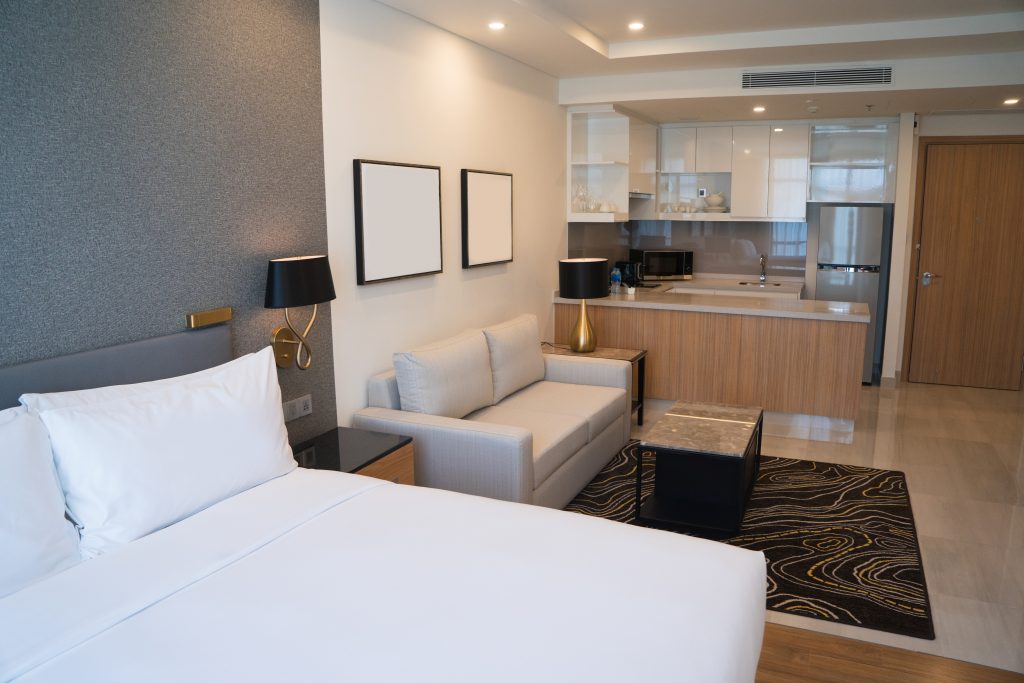
OYO Life in Japan
In Japan, short to medium-term business trips are common among white-collar workers. Compared to traditinoal rental agreement that requires at least 6-months-long lease, OYO Life provides short-term agreement which matches the needs of Japanese work culture.
How does this Benefit Property Owners?
In customers’ perspective, OYO Life is convenient as it makes the moving decision much easier. Shall there be any unsatisfication occurs during tenancy, customers can just move to another OYO apartment.
So, how does this benefit property owners?
OYO Life’s biggest benefit to property owerner, I would say, is to prevent vacancy loss.
OYO will be the lessee to the apartment and further sublease to OYO users. Therefore, promising a stable rent income to owners regardless of vacancy.

What are the Cons?
Looking at the pros of this new style of renting, sure it is attractive to many tenants as well as real estate investors.
Let’s also look at some the disadvantages that comes with it.
- Rent more expensive than market average – with the advantage of low contract cost, monthly rent is set higher than market’s average.
- Problem in Garbage Disposal – the rules of garbage disposal in Japan differs by area and can be complicated sometimes. While this problem can occur in all rental properties, short-term tenants may have a harder time to adapt to the unique rules.
- Neighbor Compliants – this is often seen in private lodging such as Airbnb. Nearby neighbors feel unease from temporary tenants and short-term guests as they have no idea who is moving in and out next.
OYO Life’s new style of renting is definitely changing the rental industry in Japan.
Before deciding whether or not to operate your property with OYO, it might be a good idea to consider the above.
For more information, comment below or visit